
Dancing
rhythmic movement, dance therapy, physical expression
Dancing is a fun, inclusive activity for all ages and abilities, offering a fantastic way to stay active, improve your mood and have fun.
MoreLess
What is dancing?
Dancing is more than just moving to music – it’s a powerful way to improve both your mental and physical health. Whether you're a complete beginner or someone with experience, dance can be adapted to suit your ability and fitness level. You’ll get your heart pumping, improve your strength and flexibility, and even sharpen your coordination. But it’s not just about the physical benefits. Dancing is a great way to relieve stress, boost your mood, and disconnect from daily pressures. Whether you’re dancing alone at home or joining a group class, you’ll feel more energized and mentally clear. There’s no need to aim for perfection—just get your body moving with your favourite music and enjoy.
Ready to dance your way into a better mood?
Let us show you how!
Bursts that feature dancing
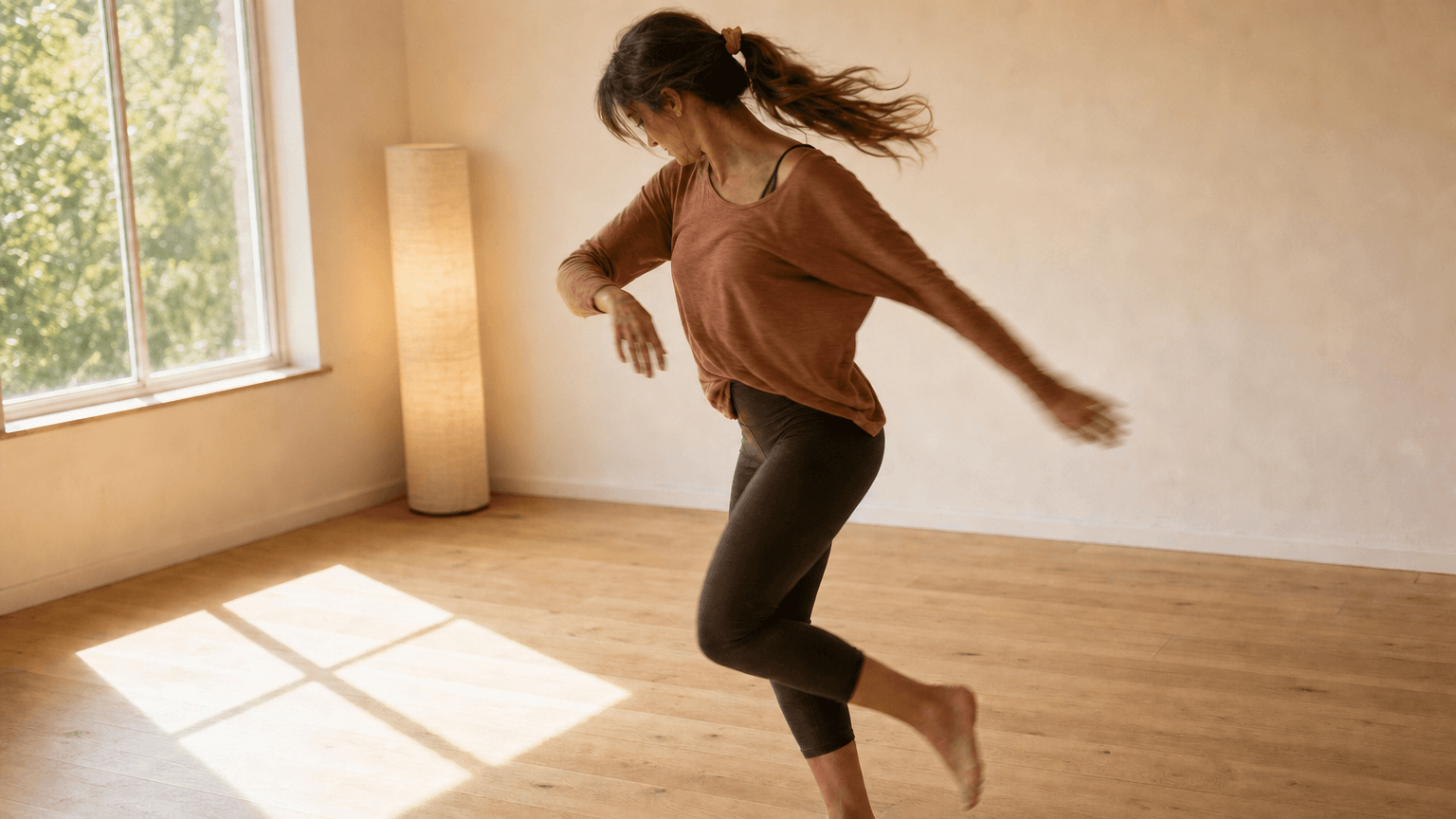
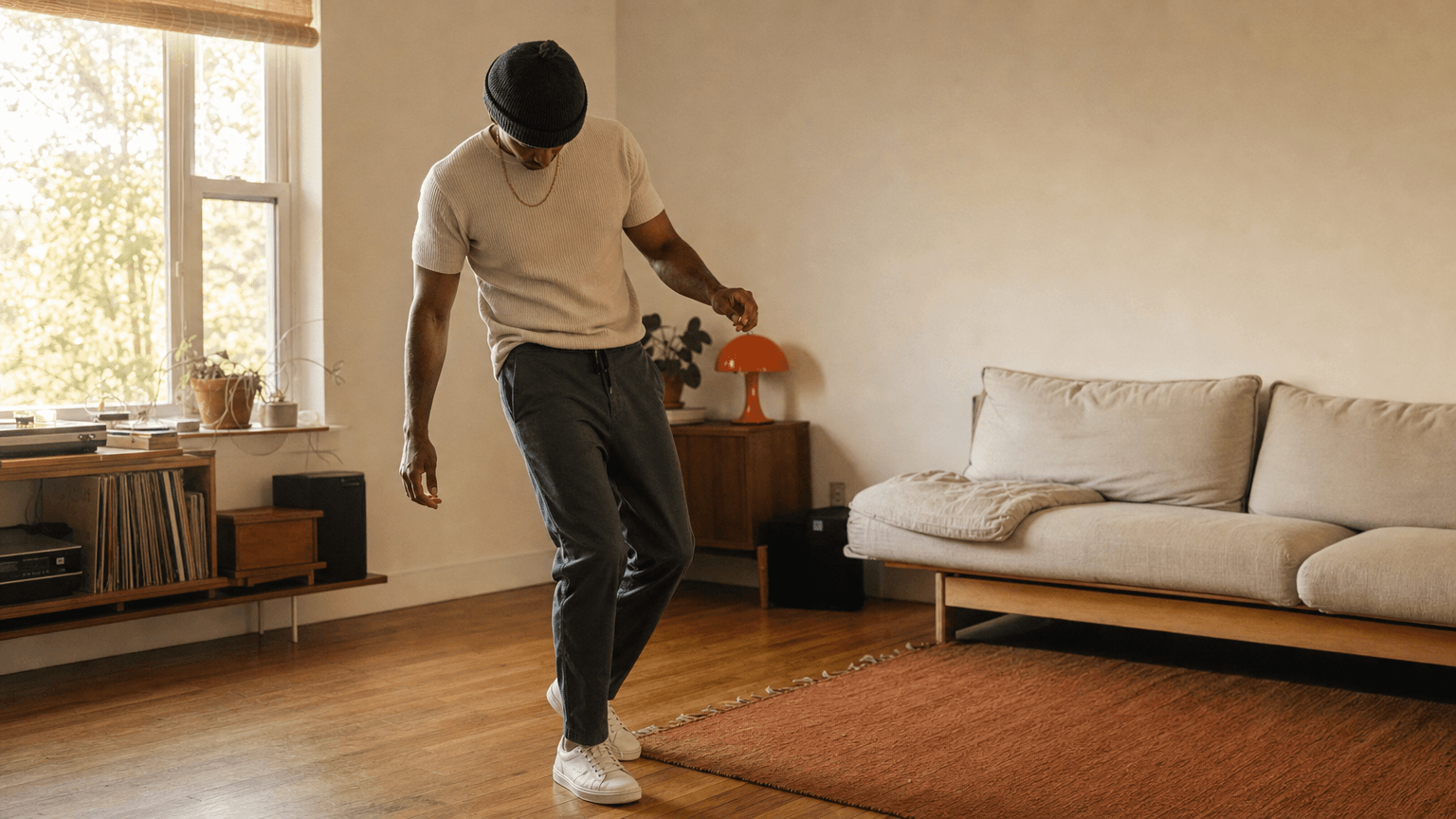


Wellbeing benefits
Why dancing is good for you
Dancing lifts mood, enhances emotional awareness, and boosts focus & confidence.
Dancing can significantly reduce the symptoms of depression, anxiety, and stress, leading to improved mood and emotional stability. (Moratelli et al., 2023).
Dancing helps to enhance muscle strength, endurance, balance, flexibility, and cardiovascular health, keeping you healthier as you age (Keogh et al., 2009).
Dance gives you a platform to express yourself authentically while promoting personal growth. Dancing also helps to promote mindfulness, self-awareness, and a deeper sense of connection (Laird et al., 2021).
Dancing, particularly when dancing as part of a group, can provide opportunities for social bonding and collective enjoyment, which will enhance your overall social well-being (Hui et al., 2009).
Dancing can improve cognitive function, including memory, attention, and executive function. It also helps to delay cognitive decline as you age (Predovan et al., 2018).
Common styles
Dancing comes in many forms, offering something for everyone, no matter your mood or fitness level. Here are a few popular styles to consider:
Includes Ballet and Contemporary dance both are mostly focused on precision, balance, and technique. Great for improving posture and flexibility.
Includes faster dances like Salsa, samba, and other rhythm-driven dances that bring heat and passion to the floor. Or slower partner dances for Ballroom like the Waltz.
Includes dance like zumba or dance cardio, a full body workout you can do almost anywhere.
You can do this with a speaker or headphones in your lounge room, or join a crowd at a festival or concert and let your body just vibe with the beat.
Self-led, one-on-one, or in a group
Whether you go it alone, join a group, or work 1:1 with a teacher, we’ve laid out what each path can look like.
Recommendation for first-timer
1st pick
We recommend dancing on your own before committing to a class, especially if dancing for fun.
Just find some great music, turn it up and move your body in a way that feels good.
However, if you are looking for technical guidance, a group or 1:1 class could be considered.
3rd pick
If you’re seeking a more personalised and challenging practice with tailored instructions or routines, then a private class might be right up your alley!
Search private dance classes in your chosen dance style, e.g. ballroom dancing, in your area and organise a trial with one that suits your needs.
2nd pick
A group class comes a close second and is great if you want to nail a more classical style or master some technical skills with motivation, connection, support and guidance from other people.
Search dance studios near you, and organise a trial with the one that suits you.
Availability
Widely
You can turn on the music and start dancing whenever and wherever you want.
However, if you want to learn a particular routine, then streaming an online class or downloading a dancing app is the quickest and easiest way to squeeze a workout in at home.
Widely
Most dance schools will offer private lessons. You may need to travel to a studio, however an online 1:1 dance class can easily be accessed from your home.
Widely
Search your favourite dance style and look for a class near you.
You will need to travel to the studio, however dance classes are readily available in most areas.
Average cost per session
Free or low cost
This is a zero-cost activity. Find some music and get grooving.
But if you want to work on some technique or improve your style then there are plenty of online options. Learn-to-dance apps are between $10-$30 p/m, however YouTube offers free dancing videos that can easily be streamed at home.
Expensive
Hiring a private instructor is a great option, and will cost between $80-$150 p/h.
Free or low cost
Attending a guided class IRL will cost between $15-$30 per class.
Special equipment required
None or minimal
If you are dancing for fun at home, choose whatever footwear suits your flooring. And this might just mean kicking your shoes off.
None or minimal
Equipment will be provided by the studio for the 1:1 option if doing a class in person, though shoes will need to be supplied at your own cost.
However, if you are doing a 1:1 class at home, your instructor can recommend required footwear.
Some with costs
Equipment will be provided by the studio, though shoes will need to be supplied at your own cost.
Shoes will depend on the dance style:
- Ballet ($20-$30)
- Tap ($46-$65)
- Jazz ($45-$55)
Some styles do not require shoes at all, so we recommend checking before booking your class.
Potential for socialisation & community
Mostly solo
If you prefer the privacy of dancing alone, then a self-led practice will provide this for you. But perhaps you have willing participants at home who are happy to jump into an impromptu groove with you.
Social potential
A private 1:1 class with an instructor means that you will be dancing on your own, however, that personal 1:1 practice may help to create a social connection with your instructor.
Highly social
Dancing with an instructor and in a group class can be lots of fun. You should feel a sense of belonging and connection that you wouldn’t get on your own.
Safety & skill building
Consider risks
- Dancing at home will be fairly safe, however, it will be up to you to pay attention to your surroundings and your body.
- If you are following an online guided session you will need to make your own assessment of whether advanced steps are suitable for you.
Consider risks
- A private instructor will provide instant feedback on form and technique for a safer practice.
- A private session is tailored specifically to you, so your progress will improve at a greater rate than if on your own or in a group setting.
Mixed results
- It is part of the instructor's role to catch form and technique errors, however class sizes may not always allow for this.
- Advanced steps or techniques should be suggested during the routine to build on your current skill levels.
Space or privacy required
Minimal
Find a room with enough space around you to dance if you need it.
You could even dance outside if you want.
Minimal
If practising at a studio, your instructor will ensure you have the space and privacy to practice correctly.
If at home, make sure you can see and hear your instructor clearly. We recommend finding a place with a safe surface and room to move.
Minimal
Studio sizes will be suitable for dancers to move with little to no interference from other class members and optimal privacy from those outside the class.
Ease of scheduling
Very flexible
You can dance anytime. Take advantage of all the moments when some great music is playing.
Need to plan
Dance instructors offer flexibility, however you will still have to choose from particular days and times available.
Quite rigid
Class days and times are pre-scheduled so you may have to hunt around for a class and time that suits you.
Setup time
Little to none
Simply pull on your dancing shoes (or take them off), turn up the music and start to move.
Otherwise, if you want to follow a routine, whip out your phone (or device of choice), choose a routine that you like and get started.
Up to 30 mins
Is this a virtual session?
Pull on your dancing shoes, whip out your phone (or device of choice), and get started.
Doing it privately in a studio?
Consider:
- Driving to and from the studio
- How long it will take to pay and discuss any needs with the instructor.
Over 30 mins
Consider:
- Driving to and from the studio
- How long it will take to pay and discuss any needs with the instructor
- How long it will take to grab any props, pull on the dancing shoes, and settle in.
Active practice time
Under 20 mins
You can dance for as long or as little as you like.
Simply stream a class or search your learn-to-dance app for a routine that suits how much time you have available.
An hour +
A private dance class usually runs for between 45 to 90 minutes depending on the instructor and their session plan.
An hour +
Most classes run for between 45 to 90 minutes.
Unexpected advantages
Random
Dancing on your own means you can perfect your unique moves.
Random
It will make you smarter! Learning choreography can improve your memory, making you less likely to forget where you put your keys.
Wholesome
It will make you happier because dancing badly is sure to make you and anyone watching laugh out loud.
Academic research we rate
- The Effectiveness of Dance Interventions on Psychological and Cognitive Health Outcomes Compared with Other Forms of Physical Activity: A Systematic Review with Meta-analysis
Full citationHide citation
- Quality of life of women who practice dance: a systematic review protocol
Full citationHide citation
- Impact of dance therapy on adults with psychological trauma: a systematic review
Full citationHide citation
- Sport and dance interventions for healthy young people (15–24 years) to promote subjective well-being: a systematic review
Full citationHide citation
- EFFECTS OF DANCE INTERVENTIONS ON COGNITION IN OLDER ADULTS: A META-ANALYSIS
Full citationHide citation
Show all 10 studiesShow fewer studies
- The Effectiveness of Dance Interventions on Physical Health Outcomes Compared to Other Forms of Physical Activity: A Systematic Review and Meta-Analysis
Full citationHide citation
- The impact of dance‐movement interventions on psychological health in older adults: A systematic review and meta‐analysis of randomized controlled trials
Full citationHide citation
- Does dance counteract age-related cognitive and brain declines in middle-aged and older adults? A systematic review
Full citationHide citation
- Dance intervention effects on physical function in healthy older adults: a systematic review and meta-analysis
Full citationHide citation
- The Effectiveness of Plaza Dancing on Psychological Well-Being and Ill-Being: A Systematic Review and Meta-Analysis
Full citationHide citation
Safety
We bet you're ready to hit the dance floor. But before you do, there are some important things to keep in mind. Dancing is fun, and these helpful tips will make sure you are dancing in the safest way possible before you put on your dancing shoes.
- Listen to your body, start gradually and practise with care to minimise risks. If you are pregnant or have a health condition, we recommend consulting with your healthcare provider.
- Wear appropriate footwear.
What you might experience
It’s completely normal to feel excited, but also a little awkward or self-conscious when starting dancing for the first time. Before you know it, you will learn the steps and what is expected within each dance routine.
The lesson has started, and you feel a little lost. You don’t know how you are supposed to move your body and you feel like you have two left feet! Don’t worry, because the more you practice, the more familiar the routine will become.
You might become increasingly aware of your body and like you can’t move the same way as the instructor. You might even accidentally trip over during a trickier movement and laugh at yourself. This is all just part of the process. Everyone’s body is different and we all learn at different rates. Just have fun with it, laugh at yourself, and enjoy how it feels to simply move your body.
It’s a new dance routine, and you might be struggling to remember the steps. Be kind to yourself, and remember that practice makes perfect, or at the very least, practice will help you to remember the moves. Most likely.
Yes, you can. As you head towards the end of your first lesson, you may experience a feeling of relief that the hard parts are over, pride that you made it through, and surprise that you don’t have two left feet after all.
Check it out


Want to try dancing alongside some other activities?
You don't have to build a routine from scratch. Every Burst is a ready-made plan you can schedule in a couple of taps.