Garden Wildlife Observer: A Beginner's Guide
A guide progressing from simple garden watching to exploring insects and small garden creatures
 Sun protection
 Weather appropriate clothing
Set length. It runs for 15 minutes from start to finish.
 15 mins · Set length
Garden Wildlife Observer: A Beginner's Guide
0:00 / 15:03 · Getting readyWhat's in this session
How to attract wildlife to your garden, step by step
This is the text version of the guide, written to follow at your own pace instead of listening. The practice time is marked so you know how long to stay with each step.
Gentle and encouraging, for when you want a kind voice to get you through.
- 1
Getting ready
Welcome to Garden Wildlife Observer: A Beginner's Guide. Over the next 15 minutes, we'll develop your awareness of the diverse wildlife living right near your home as you build observation skills and discover the small wonders in your area.
Find a comfortable spot where you can observe your outdoor space. This might be by a window, on a balcony, or seated in the garden itself—whatever works best for you today. Take a few moments to settle in before moving on.
Take a moment to scan your surroundings. What makes up this area? For about a minute, notice the plants, structures, and little pockets that create homes for the animals you're about to observe.
About 30 seconds of practice - 2
Bird watching
Let's start with birds. What can you see right now? Depending on where you are and the time of day, you might need to wait patiently or you might find plenty of activity already. Spend a couple of minutes observing what they're doing—feeding, resting, or interacting? Their movements tell us what matters to them in this moment.
About a minute and a half of practiceNow, tune into the sounds around you. For the next two minutes or so, try to connect any calls to the birds you see. Birds communicate constantly—some announce territory while others simply keep in touch with their group. Each sound has a purpose in their community.
About a minute and a half of practiceChoose one bird that interests you and watch it for a minute or two. What stands out about this particular bird? Its colours? The way it moves? How it responds to others? This focused attention can help you appreciate the individual personalities in your outdoor area.
About a minute and a half of practice - 3
Insect exploration
Let's shift focus to the smaller animals. Look at flowers or plants nearby—what insects do you notice? Take a couple of minutes to observe. Some collect pollen, others rest on leaves, and some might be busy with activities you can't immediately identify. These small creatures can be just as fascinating as their larger neighbours.
About a minute and a half of practicePay attention to how these insects move through their world for the next two or so minutes. Some zigzag through the air while others follow specific paths across leaves or soil. Each has developed its own way of moving through the complex landscape that is it’s home.
About a minute and a half of practiceIf you can, focus on just one insect for a minute or so What details do you notice about its body? The colours, shapes, and how it uses its wings or legs? These features have evolved for its role in the ecosystem—whether pollinating, recycling, or keeping other populations in balance.
About a minute and a half of practice - 4
Closing integration
As we wrap up today's observations, take a moment to appreciate the variety you've seen. Your garden is home to a community of creatures, each with its own important role. This web of life continues whether we're watching or not—but becomes more meaningful when we pay attention.
About 45 seconds of practiceWhat surprised you most during this practice? Perhaps a behaviour you hadn't noticed before, or a creature that's been there all along but you've just discovered? Take a few moments to reflect—these discoveries can be what makes observing the natural world so rewarding.
Thank you for spending time connecting with your local wildlife today. Remember that these observation skills grow stronger with practice.
Keep going in the Bearmore app
Hold on to the activities you want to keep doing, get feedback after every session and turn them into a game plan. The app is free, all of it.
More wildlife observation guides
 Nature Walk CompanionSet length · 15 minsAudio guide for observing wildlife while walking in parks or nature stripsAvailable as: Audio + text
 Night Nature Observer: Home Viewing GuideSet length · 8 minsGuide to watching nocturnal wildlife from your window or balconyAvailable as: Audio + text
 City Park Bird WatchingSelf-paced · 15+ minsTake the next 15 minutes or more in a city park. You'll be spotting and watching birds. You don't need binoculars, just enjoy what you can see.Available as: Audio + text
 Coastal Wildlife SpotterSelf-paced · 15+ minsComplete guide to observing shore birds and sea life at beaches and coastsAvailable as: Audio + text
Bursts that use this guide
Each of these ready-made routines has wildlife observation as one of its activities, with this guide to walk you through it.
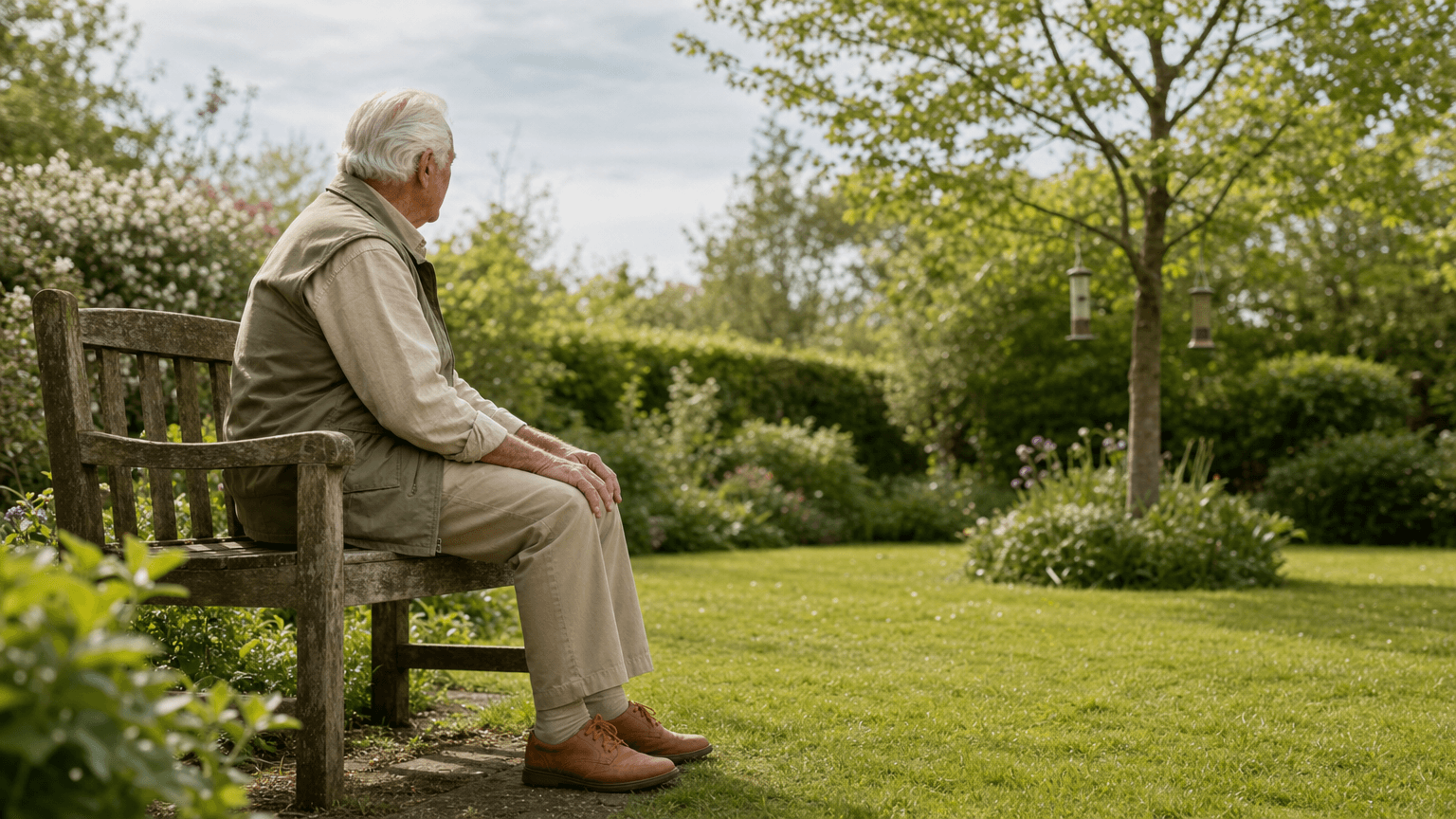
Questions about how to attract wildlife to your garden
How do you start watching wildlife?
Begin by sitting or standing still somewhere outside and simply watching for a few minutes, since stillness is what lets birds and insects carry on as normal. A garden or balcony is a good first spot. This guide walks you through that first watch.
What wildlife can you see in a garden?
Depending on where you live, common sightings include garden birds, bees and other insects, spiders, and sometimes small mammals. Even a small or city garden usually holds more life than you would expect once you slow down to look.
Do I need binoculars or equipment?
Not to start. Much garden wildlife, especially insects and nearby birds, can be watched with the naked eye, so patience matters more than kit. Binoculars are useful later if you want a closer look at birds.
Try wildlife observation inside a Burst
A Burst puts a few activities together in a ready-made routine you can schedule in a couple of taps, free in the Bearmore app.