Diaphragmatic Breathing Guide
Learn to breathe using your diaphragm with clear, simple instructions
 Comfortable surface
Set length. It runs for 5 minutes from start to finish.
 5 mins · Set length
Diaphragmatic Breathing Guide
0:00 / 5:00 · Settle & set upWhat's in this session
Diaphragmatic breathing, step by step
This is the text version of the guide, written to follow at your own pace instead of listening. The practice time is marked so you know how long to stay with each step.
Gentle and encouraging, for when you want a kind voice to get you through.
- 1
Settle & set up
Welcome to Diaphragmatic Breathing, a 5-minute practice that helps you explore breathing. We'll focus on foundation techniques to strengthen your awareness of how you breathe using your diaphragm. Before we begin, take a moment to read through these instructions. If you are new to this practice, go at your own pace.
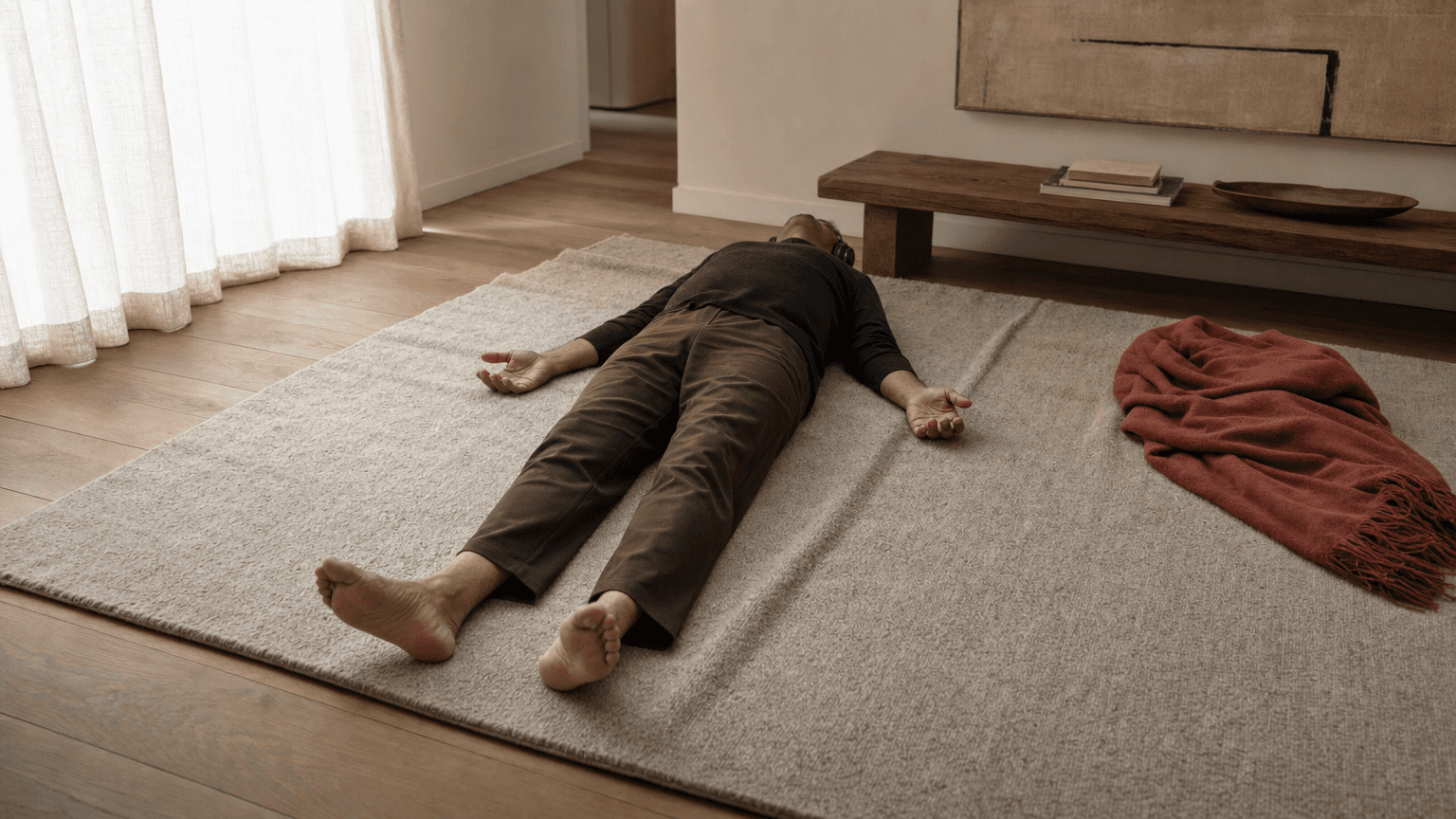
Find a comfortable position lying down on your back or sitting in a chair. Use any cushions or pillows you need to support your posture. Place one hand on your chest and the other on your belly, just below your rib cage. Give yourself a few moments to settle into this position.
Breathe in and out through your nostrils and notice any movement under your hands. Continue this observation for a minute or so.
About 30 seconds of practice - 2
Breath awareness
Breathe in through your nose, directing the air towards your lower hand. You might notice your belly rising while your chest remains relatively still - this is what we're aiming for. Keep your breathing relaxed with smooth, controlled movements. Stay with this focus for about a minute.
About a minute of practiceIf you notice your chest moving more than your belly, that's okay. Simply observe without trying to change anything just yet. Continue on with your observation for another minute or so.
About a minute of practice - 3
Closing integration
Rest your hands back down and allow your breathing to find its own pace and depth. For the next half a minute, notice any differences in how your breath feels compared to when we started.
Take a few breaths as you close the practice. Remember, you can return to this technique anytime you want to bring more awareness to your breathing.
About 25 seconds of practice
Keep going in the Bearmore app
Hold on to the activities you want to keep doing, get feedback after every session and turn them into a game plan. The app is free, all of it.
More breath work guides
 Twenty Minutes of Box BreathingSet length · 20 minsTake twenty minutes for box breathing. You'll breathe in for a count of four, hold for four, breathe out for four and hold for four, and repeat that the whole way through.Available as: Audio + text
 Sit Up, Breathe, Back to ItSet length · 5 minsTake five minutes away from the screen for some slow breathing. You'll start by sitting up tall and letting your shoulders drop, then breathe while you rest your eyes on something further away.Available as: Audio + text
 Box Breathing (with quick-stop option)Set length · 6 minsA simple, structured breathing technique that can be learnt in one sessionAvailable as: Audio + text
 Getting Started with Steady BreathingSet length · 4 minsA beginner-friendly introduction to controlled breathing focusing on steady countsAvailable as: Audio + text
 The Long Exhale: Fifteen MinutesSet length · 15 minsA fifteen-minute breathing practice built on long, slow exhales to help the body shift down a gear.Available as: Audio + text
Bursts that use this guide
Each of these ready-made routines has breath work as one of its activities, with this guide to walk you through it.



Questions about diaphragmatic breathing
What is diaphragmatic breathing?
It is breathing that uses your diaphragm, the muscle below your lungs, so your belly expands as you breathe in and your chest stays fairly still. It is sometimes called belly breathing.
What is diaphragmatic breathing good for?
People use it to slow the breath and feel calmer, and it is a common first step in learning to breathe more steadily. Slow breathing like this is widely taught for relaxation.
How do I know I am doing it right?
A hand on your belly should rise as you breathe in, while the hand on your chest barely moves. The guide talks you through this so you can check as you go.
Try breath work inside a Burst
A Burst puts a few activities together in a ready-made routine you can schedule in a couple of taps, free in the Bearmore app.