After Work Recovery
Help transition from work to personal time through structured deep relaxation.
 Comfortable surface
Set length. It runs for 18 minutes from start to finish.
 18 mins · Set length
After Work Recovery
0:00 / 18:03 · Introduction & SetupWhat's in this session
Non-sleep deep rest, step by step
This is the text version of the guide, written to follow at your own pace instead of listening. The practice time is marked so you know how long to stay with each step.
Gentle and encouraging, for when you want a kind voice to get you through.
- 1
Introduction & Setup
Welcome to After Work Recovery, an 18-minute practice designed to help you transition from work mode to personal time. We'll use foundation Yoga Nidra techniques to help create that important space between your workday and evening. Take a few moments to read through now before you begin.
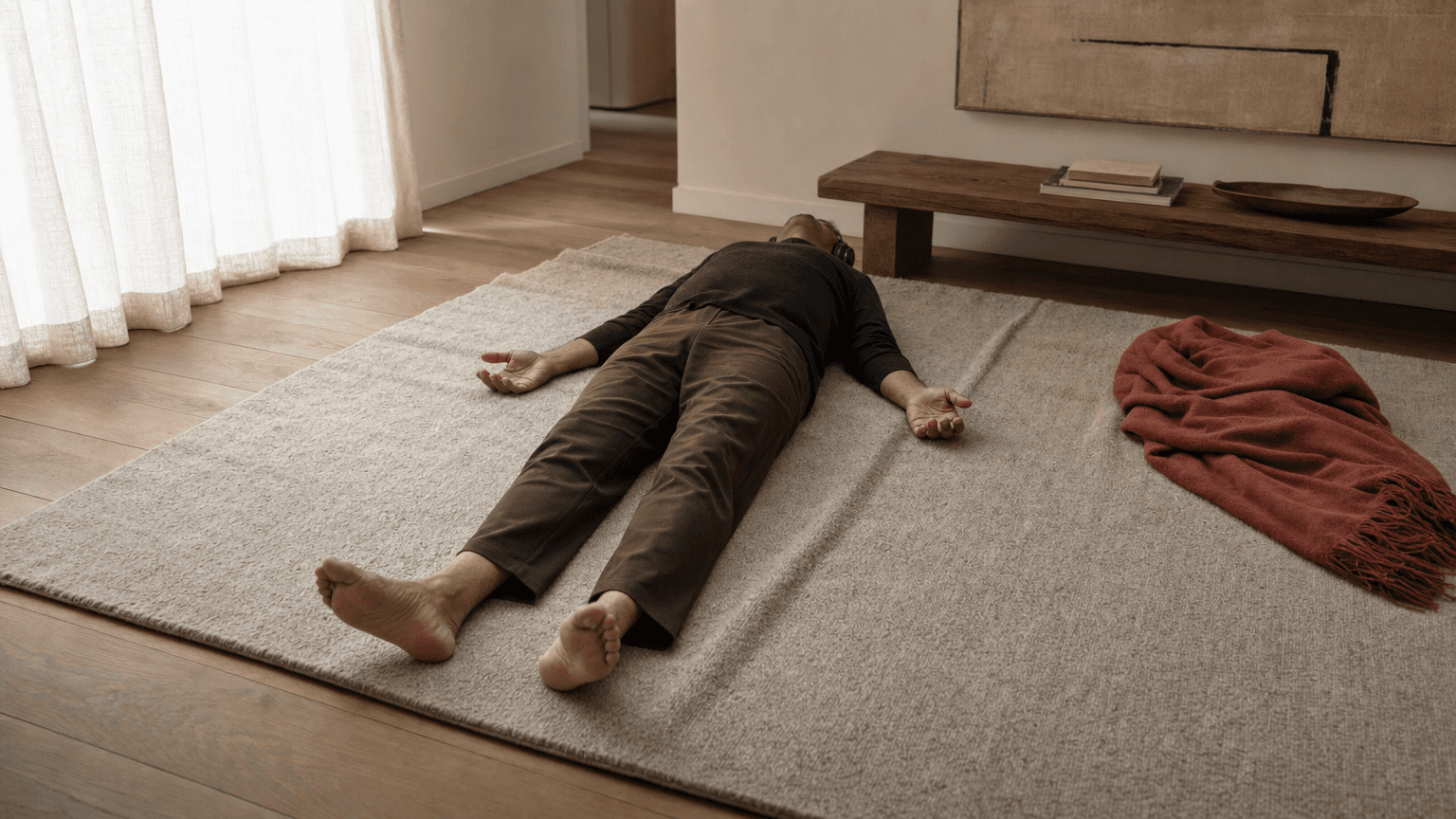
Find a quiet spot where you can lie down without interruption. A yoga mat works well, but any surface where you can lie comfortably on your back is fine. Consider adding a pillow under your head and keeping something warm nearby if you tend to get cool while resting.
Lie down with your arms at your sides, palms facing up, and feet slightly apart. This position may help your body unwind. Spend the next couple of minutes making any adjustments you need until you feel settled.
About 2 minutes of practice - 2
Conscious Rest
Start with your breathing, noticing how it flows in and out. This helps you step back from the busy thoughts of your workday. Stay with this for a minute which is any where from 8-20 breaths.
About a minute of practiceEach time you breathe out, you're letting go of the day's activities. No need to force anything - we're just creating space between work and home. Continue this for another dozen breaths or so.
About a minute of practiceYour mind might bring up tasks or meetings - that's completely normal. Just notice when that happens and come back to following your breath. Focus on the releasing feeling as you exhale for the next few minutes. This would be anywhere from 30 to 45 breaths.
About 2 and a half minutes of practice - 3
Body Awareness
Now check in with your body where it touches the floor. Notice your shoulders, back, and hips. These areas often retain the physical effects of desk work - observe if they feel tight or relaxed, heavy or light. Stay with these sensations for a minute or so.
About a minute of practiceMove your attention to your legs. Notice your thighs, knees, calves, and feet. They might feel warm or cool, heavy or light. Observe the sensations appearing after your workday for about a minute and a half.
About a minute of practiceScan from your lower back, through your ribs, to your shoulders. These areas might feel tense from today's activities. Or they could feel just fine. Spend another minute or noticing how they feel without trying to fix anything.
About a minute of practiceCheck in with your arms, neck, and head, taking time to notice if they feel energised or tired, loose or contracted. This awareness might reveal something about your work patterns, but for now simply observe the sensations. Spend a minute or so here.
About a minute of practice - 4
Returning & Integration
Now let’s begin waking up your body gradually. Take several deeper breaths - this helps maintain the calm you've built while transitioning back.
About a minute of practiceAdd slow, easy movement, over the next dozen breaths or so to wiggle your fingers and toes, then make a few circles with your wrists and ankles. Keep the pace unhurried.
About a minute of practiceRoll to one side, staying there for several breaths. Then push yourself up to sitting at your own pace.
Well done - you've created a clear break between work and personal time.
Keep going in the Bearmore app
Hold on to the activities you want to keep doing, get feedback after every session and turn them into a game plan. The app is free, all of it.
More yoga nidra guides
 First Steps: Deep Rest BasicsSet length · 12 minsA clear introduction to Yoga Nidra that guides you into a state of relaxed awareness, perfect for beginners.Available as: Audio + text
 Evening Rest for Better SleepSet length · 15 minsA soothing practice designed to help you transition into restful sleep through systematic body relaxation.Available as: Audio + text
 Extended Deep Rest SessionSet length · 30 minsA longer practice that allows for a more immersive experience when time permits.Available as: Audio + text
Bursts that use this guide
Each of these ready-made routines has yoga nidra as one of its activities, with this guide to walk you through it.
Questions about non-sleep deep rest
What is non-sleep deep rest?
NSDR is a guided practice where you relax deeply while staying awake, usually lying down and following a voice. It draws on yoga nidra and is used to rest and recover without sleeping. This guide uses it to help you wind down after work.
How is NSDR different from a nap?
With NSDR you stay awake and follow guided relaxation, rather than falling asleep, so there is no grogginess to shake off afterwards. Many people use it when they want to recover but do not have time, or do not want, to nap. This guide runs about eighteen minutes.
When is a good time to use it?
It works well in the late afternoon or after a demanding stretch of work, when you want to reset before the evening. You can use it whenever you feel depleted and want quiet, awake rest.
Try yoga nidra inside a Burst
A Burst puts a few activities together in a ready-made routine you can schedule in a couple of taps, free in the Bearmore app.