
Red light therapy
RLT, light therapy, infrared
Red light therapy is a non-invasive treatment that uses low-level red wavelengths of light to promote tissue restoration, reduce inflammation and improve skin health.
MoreLess
What is red light therapy?
Red light therapy (RLT) is a versatile and innovative treatment that uses the power of specific red light wavelengths to benefit your body at a cellular level. Originally used by NASA for plant growth in space, it has evolved into a popular method for enhancing skin health, reducing pain and accelerating recovery from injuries. This non-invasive treatment works by penetrating the skin to stimulate rejuvenation in the cells, which can lead to improved soft tissue repair, reduced inflammation and a more youthful appearance.
Whether you're looking to treat a specific condition or simply boost your overall wellbeing, red light therapy offers an accessible and effective solution that can easily be integrated into your routine, either at home or in a professional setting.
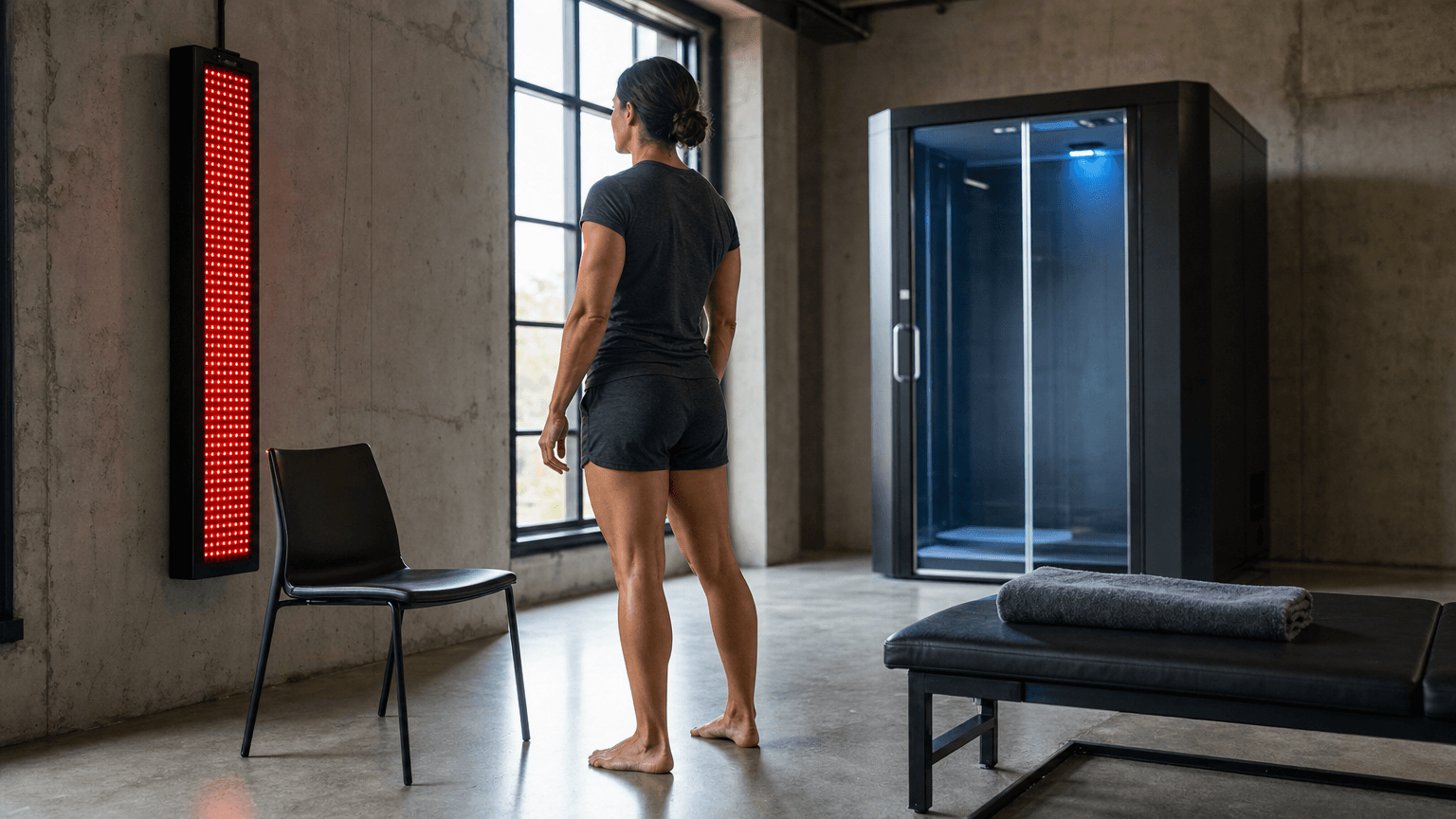
Bursts that feature red light therapy

Wellbeing benefits
Why red light therapy is good for you
Red light therapy speeds physical recovery. Regular sessions enhance energy levels, reduce inflammation and improve mood.
Red light therapy is widely recognised for its ability to improve skin conditions, including acne, wrinkles and scars. By stimulating collagen production, it helps to rejuvenate the skin, giving it a more youthful and healthy appearance (Avci et al., 2013).
The anti-inflammatory effects of red light therapy are well-documented. It works by penetrating deep into tissues, reducing inflammation and promoting faster recovery from injuries and chronic conditions such as arthritis (Hamblin, 2017).
RLT has been shown to be effective in reducing pain by promoting better circulation and healing in the affected areas. It’s commonly used to alleviate joint and muscle pain, making it a go-to treatment for athletes and individuals with chronic pain issues (Wang et al., 2016).
Athletes and fitness enthusiasts often use red light therapy to speed up muscle recovery. The treatment enhances cellular energy production, which accelerates the repair of muscle tissue after intense workouts (Leal Junior et al., 2010).
Red light therapy can also have positive effects on mood by influencing the body’s natural circadian rhythms. Regular use may help alleviate symptoms of depression and anxiety, contributing to better mental health (Barolet et al., 2016).
Common styles
Convenient for regular use, home devices target areas like the face or muscles, improving skin health and relieving minor aches.
Offered in clinics, these sessions use advanced equipment to treat chronic pain and severe skin conditions, ideal for professional care.
Athletes use red light therapy to enhance muscle recovery and reduce inflammation, speeding up recovery and boosting performance.
Used for anti-ageing, red light therapy improves skin tone and reduces wrinkles, popular in both home and spa settings.
Self-led, one-on-one, or in a group
Whether you go it alone, join a group, or work 1:1 with a teacher, we’ve laid out what each path can look like.
Recommendation for first-timer
1st pick
Ideal for beginners due to ease of access and control over sessions. You can start at home with a personal device, making it a convenient way to explore it’s benefits.
Not picked
-
Not picked
Overall, while red light therapy is widely accessible in major cities, group sessions are still emerging as a trend and may require some searching to find.
Availability
Widely
Widely available through home devices that you can purchase online or in stores. You can use it anytime, fitting it into your schedule with ease.
-
-
-
-
Average cost per session
Expensive
After the initial purchase, ongoing use is limited to power or charging costs, making it cost-effective over time.
A session at a health centre, spa or recovery centre typically costs between $25 to $75. Package deals or memberships can reduce per-session costs.
-
-
-
-
Special equipment required
Costly equipment
At-home use requires a red light therapy device, which can be as simple as a hand-held unit or a full-body panel. They range in price from $200 to many thousands of dollars.
No additional equipment is necessary.
-
-
-
-
Potential for socialisation & community
Mostly solo
Primarily a solo activity, focused on personal health. It’s perfect for those who prefer privacy and quiet reflection during their sessions.
-
-
-
-
Safety & skill building
Mixed results
Generally safe with proper use, but beginners should follow guidelines to avoid overuse. No special skills are required, making it accessible to all.
-
-
-
-
Space or privacy required
Minimal
Can be done privately at home, in any room with enough space for the device. Offers complete privacy and control over the environment.
-
-
-
-
Ease of scheduling
Very flexible
Extremely flexible, allowing you to schedule sessions at your convenience, whether in the morning, afternoon or evening.
A booking will be required for a spa or recovery centre.
-
-
-
-
Setup time
Little to none
Minimal setup required – just place the device in the desired location and start the session. Perfect for those who want a quick and easy start.
Factor in travel time if visiting an external location.
-
-
-
-
Active practice time
Under 20 mins
Sessions typically range from 10 to 20 minutes, depending on the device and your goals. You can reduce the time to fit your needs or schedule.
-
-
-
-
Unexpected advantages
Random
Don't tell whoever you live with that you're getting a mask. You'll have a one-time opportunity to freak them out!
-
-
-
-
Academic research we rate
- Effect of phototherapy (low-level laser therapy and light-emitting diode therapy) on exercise performance and markers of exercise recovery: a systematic review with meta-analysis
Full citationHide citation
- A single-blind, dose-escalation, phase I study of high-fluence light-emitting diode-red light on Caucasian non-Hispanic skin: study protocol for a randomized controlled trial
Full citationHide citation
- The Anti-Acne Effect of Near-Infrared Low-Level Laser Therapy
Full citationHide citation
- Transcranial infrared laser stimulation produces beneficial cognitive and emotional effects in humans
Full citationHide citation
- A randomized, sham-controlled trial of a novel near-infrared phototherapy device on sleep and daytime function.
Full citationHide citation
Show all 10 studiesShow fewer studies
- Red (660 nm) and infrared (830 nm) low-level laser therapy in skeletal muscle fatigue in humans: what is better?
Full citationHide citation
- Effects of Near-Infrared Light on Well-Being and Health in Human Subjects with Mild Sleep-Related Complaints: A Double-Blind, Randomized, Placebo-Controlled Study
Full citationHide citation
- Red light and the sleep quality and endurance performance of Chinese female basketball players.
Full citationHide citation
- Dose response of transcranial near infrared light stimulation on brain functional connectivity and cognition in older adults—A randomized comparison
Full citationHide citation
- Light emitting diode‐red light for reduction of post‐surgical scarring: Results from a dose‐ranging, split‐face, randomized controlled trial
Full citationHide citation
Safety
You've seen the masks, read the research and you're eager to dive in. While red light therapy is generally safe, there are some key details to consider. We've compiled the essential information to help you enjoy this activity successfully and safely.
- Listen to your body, start gradually and practise with care to minimise risks. If you are pregnant or have a health condition, we recommend consulting with your healthcare provider.
- Ensure you are using the correct equipment and it’s not faulty.
- Discontinue use if you experience any adverse reactions.
What you might experience
You’re about to try red light therapy for the first time, and you’re curious. It’s natural to wonder if this will really work. The red light penetrates the skin to support cellular activity and improve areas like skin health, inflammation and muscle recovery. You’re here to see how it feels first-hand.
As the red light therapy session begins, you notice a gentle warmth on your skin. It’s not uncomfortable – in fact, it’s quite relaxing. The soothing light feels warm and it can be quite enjoyable. You’re not doing much, but even just taking a bit of time out to be still could be something you appreciate.
A few minutes in, you start wondering if you should be feeling more. Red light therapy works at the cellular level, so it’s not always immediately noticeable. You might not feel drastic effects during the session, and that’s perfectly normal. The real benefits often come over time as your body responds to the light.
As the session continues, you may find yourself enjoying the stillness. You didn’t expect it to be this relaxing, but sitting under the light feels like a break from your busy day. Don’t be surprised if you find yourself anticipating what the results will be like when the session finishes.
As the session ends, you feel refreshed, and your skin feels slightly different in a way that’s difficult to pinpoint. Although the effects may not be immediate, you’re excited to keep going and see what benefits come with continued use. Red light therapy can feel easy to integrate into your routine, and it might even have you thinking about scheduling your next session.
Check it out
Hot & cold


Want to try red light therapy alongside some other activities?
You don't have to build a routine from scratch. Every Burst is a ready-made plan you can schedule in a couple of taps.